What Is Compound Interest? How It Works and How to Grow Your Money
Compound interest is one of the most important concepts to understand if you want to build savings or grow investments over time. Unlike simple interest, compound interest allows you to earn interest not only on your original money but also on the interest that has already been added.
This is why compounding is often described as “interest earning interest.”
Whether you're saving for retirement, building an emergency fund, investing for the long term, or paying off debt, understanding compound interest can help you make smarter financial decisions.
In this guide, we'll explain what compound interest is, how it works, the formula behind it, real-world examples, and how you can use compounding to grow your money.
What Is Compound Interest?
Compound interest is interest calculated on both your original principal and the accumulated interest from previous periods.
In simple terms:
Your money earns interest → that interest gets added to your balance → the larger balance earns more interest.
For example, suppose you deposit $1,000 into an account earning 5% annual interest.
After one year, you earn $50.
Your balance becomes:
$1,000 + $50 = $1,050
During the second year, you don't earn interest only on the original $1,000. You earn interest on $1,050.
At 5%, that's $52.50.
Your balance becomes:
$1,102.50
The longer this process continues, the greater the effect of compounding.
How Does Compound Interest Work?
Compound interest generally involves four important factors:
1. Initial principal – The amount you start with.
2. Interest rate – The annual percentage your money earns.
3. Compounding frequency – How often interest is added to your balance.
4. Time – How long your money remains invested or saved.
The longer you allow your money to compound, the greater the potential growth.
Example
Imagine you invest $5,000 at an average annual return of 7% and don't add any additional money.
After approximately:
| Time | Approximate Value |
|---|---:|
| 5 years | $7,013 |
| 10 years | $9,836 |
| 20 years | $19,348 |
| 30 years | $38,070 |
This example demonstrates the power of leaving money invested for a longer period.
Actual investment returns can vary, and investments can lose value.
Compound Interest Formula
The basic compound interest formula is:
A = P(1 + r/n)^(nt)
Where:
- A = Final amount
- P = Principal or initial amount
- r = Annual interest rate expressed as a decimal
- n = Number of times interest compounds per year
- t = Number of years
For example, if you invest $2,000 at 5% annual interest compounded annually for 10 years:
A = 2,000(1 + 0.05/1)^(1×10)
The final amount would be approximately $3,258.
That means you earned about $1,258 in interest without adding more money.
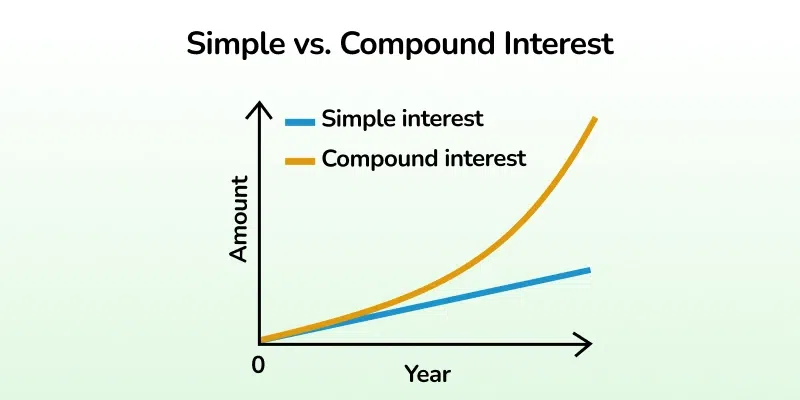
What Is the Difference Between Simple Interest and Compound Interest?
The main difference is how interest is calculated.
Simple Interest
Simple interest is calculated only on the original principal.
For example:
$1,000 × 5% = $50 per year.
The interest remains based on the original $1,000.
Compound Interest
Compound interest is calculated on the original principal plus previously earned interest.
The balance grows over time, which means the amount of interest earned can also increase.
| Feature | Simple Interest | Compound Interest |
|---|---|---|
| Interest calculated on | Original principal | Principal + accumulated interest |
| Growth | Linear | Potentially exponential |
| Long-term effect | Lower | Higher |
| Common use | Certain loans and financial products | Savings and investments |
Why Is Compound Interest So Powerful?
The biggest advantage of compound interest is time.
When you give your money more time to compound, even relatively small amounts can potentially grow substantially.
Consider two people:
Person A
Invests $200 per month starting at age 25.
Person B
Invests $200 per month starting at age 35.
If both earn similar long-term investment returns, Person A generally has a significant advantage because their money has more years to compound.
This is one reason starting early can be more important than trying to invest a large amount later.
Compound Interest and Regular Contributions
You don't need to start with thousands of dollars to benefit from compounding.
Regular contributions can make a major difference.
For example, suppose you invest:
$200 per month
and earn an average annual return of 7%, compounded monthly.
Over 30 years, your total contributions would be:
$72,000
But the account could potentially grow to roughly $244,000, depending on the actual investment return.
The difference comes from investment growth and compounding.
Remember that a 7% return is an example, not a guaranteed investment return.
Compound Interest in Savings Accounts
Compound interest isn't limited to investing.
Banks and credit unions may pay interest on savings accounts, certificates of deposit (CDs), and other deposit products.
For example, if your savings account earns interest and the interest is added to your account balance, future interest may be calculated on that larger balance.
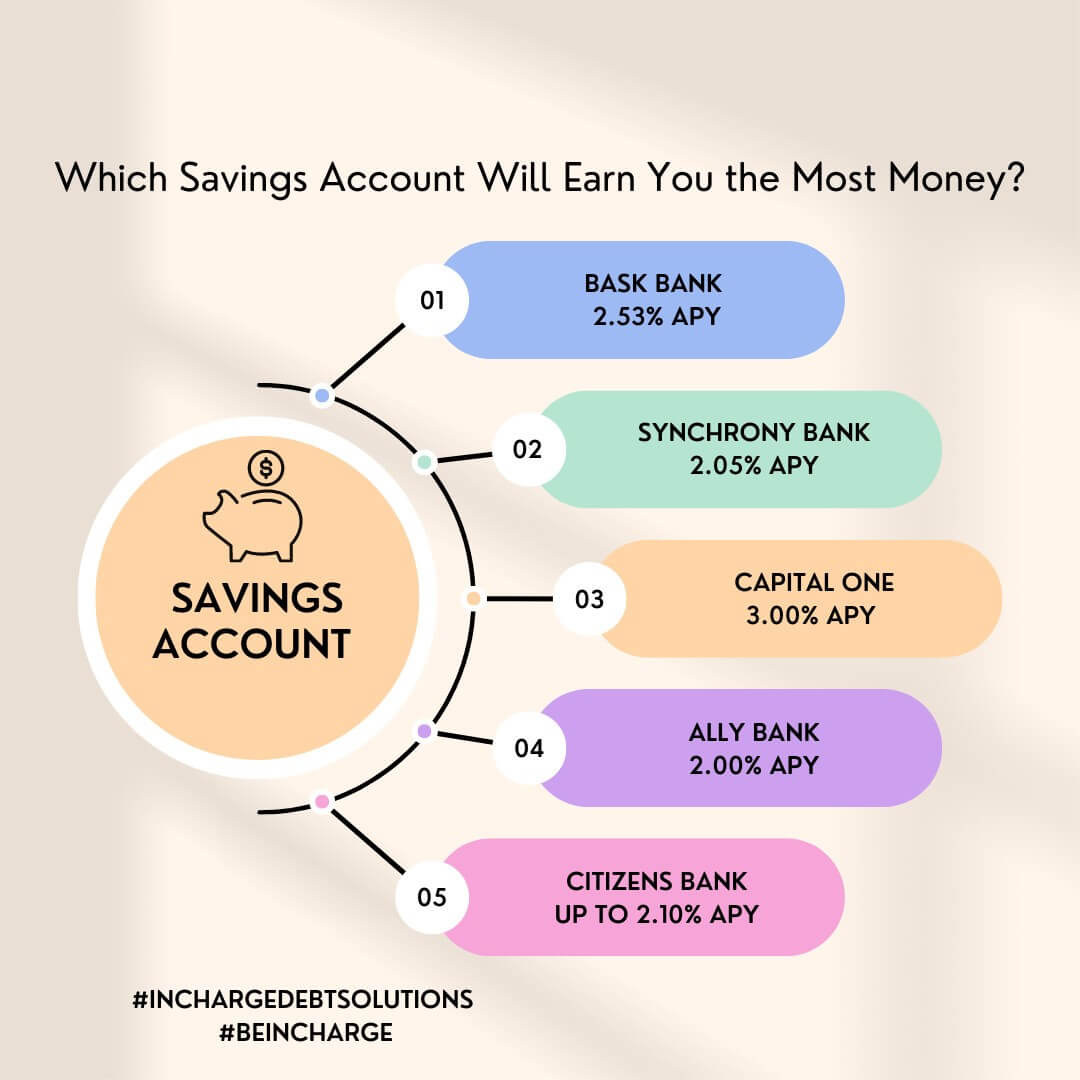
However, savings account rates can change, so the actual amount you earn depends on the account's current APY and terms.
APY vs. Interest Rate
When comparing savings accounts, you'll often see APY, or Annual Percentage Yield.
APY reflects the effect of compounding over one year and can make it easier to compare deposit accounts.
How Often Does Interest Compound?
Interest can compound at different frequencies.
Common schedules include:
- Daily
- Monthly
- Quarterly
- Annually
Generally, assuming the same stated rate and other terms, more frequent compounding can produce a slightly higher effective return.
However, you should compare the APY, fees, and account terms rather than looking only at the compounding frequency.
Compound Interest on Credit Cards
Compound interest can work against you as well as for you.
Credit card balances can become expensive when you carry unpaid balances from month to month.
If interest and fees increase the amount you owe, future interest may be charged on a larger balance.
For this reason, paying credit card balances on time and avoiding unnecessary high-interest debt can be an important part of financial planning.
The Key Difference
When saving or investing: You want compounding to work for you.
When carrying expensive debt: You want to minimize the amount of interest accumulating against you.
How to Take Advantage of Compound Interest
Here are several practical ways to benefit from compounding.
1. Start Early
Time is one of the most valuable parts of compounding.
Starting earlier can give your money more years to potentially grow.
2. Contribute Regularly
Instead of investing only once, consider making consistent contributions when appropriate for your financial situation.
Even small recurring contributions can add up over many years.
3. Reinvest Your Earnings
If you're investing, reinvesting dividends or other distributions can allow more money to remain invested and potentially compound.
4. Avoid Unnecessary Withdrawals
Taking money out reduces the amount available for future growth.
Before withdrawing long-term savings, consider the potential impact on future compounding.
5. Pay Down High-Interest Debt
Compound growth is beneficial when it works in your favor.
High-interest debt can work in the opposite direction, so reducing expensive debt can be financially valuable.
Compound Interest vs. Investing Returns
It's important to understand that compound interest and investment returns aren't exactly the same thing.
A savings account may pay a stated interest rate and APY.
An investment such as a stock or mutual fund does not normally provide a guaranteed fixed return.
Instead, its value can rise or fall based on market performance.
Over long periods, investment growth can compound when returns remain invested, but actual results can vary significantly.
What Is the Rule of 72?
The Rule of 72 is a simple estimation method that can help you understand how long it may take an investment to double.
The formula is:
72 ÷ Annual Rate of Return = Approximate Years to Double
For example:
72 ÷ 8 = 9 years
At an assumed 8% annual return, money could potentially double in roughly nine years.
This is only an approximation and doesn't account for taxes, fees, changing returns, or withdrawals.
Common Mistakes With Compound Interest
Starting Too Late
Waiting many years before saving or investing can reduce the amount of time available for compounding.
Ignoring Fees
Investment fees and account fees can reduce your effective returns over time.
Chasing High Returns
Higher potential returns generally come with higher risk. Don't assume a high advertised return is guaranteed.
Frequently Withdrawing Investments
Regular withdrawals can reduce the amount of money available to compound.
Carrying High-Interest Debt
Credit card and other expensive debt can grow rapidly and offset investment gains.
How Compound Interest Can Help With Retirement
Retirement planning is one of the clearest examples of long-term compounding.
Suppose someone starts investing at a young age and contributes consistently for decades.
Their contributions can potentially earn returns, and those returns can remain invested and generate additional returns.
This creates a snowball effect.
That's why retirement accounts such as 401(k)s and IRAs are commonly used for long-term wealth-building strategies.
The specific tax treatment depends on the account type and individual circumstances.
Frequently Asked Questions
Is compound interest better than simple interest?
For savings and investments, compound interest can produce greater growth over time because previously earned interest can generate additional interest.
How often should interest compound?
There isn't one universally best frequency. More frequent compounding can increase the effective return, but APY and fees are often more important when comparing savings products.
Can compound interest make me rich?
Compounding can significantly increase long-term wealth when combined with time, regular contributions, and disciplined investing. However, it does not guarantee wealth, and investment returns are not guaranteed.
Does compound interest apply to credit cards?
Credit card interest can accumulate when balances are carried, making unpaid debt increasingly expensive.
What is the easiest way to calculate compound interest?
You can use a compound interest calculator, spreadsheet, or the standard compound interest formula.
Is compound interest guaranteed in investing?
No. Investments such as stocks and mutual funds can lose value. Historical returns do not guarantee future results.
Final Thoughts
Compound interest is a simple concept with potentially powerful long-term effects.
The basic idea is straightforward: your earnings can generate additional earnings over time.
The most important factors are:
- Start as early as possible
- Invest or save consistently
- Give your money time to grow
- Reinvest earnings when appropriate
- Keep fees and taxes in mind
- Avoid expensive debt
- Understand the risks of your investments
You don't necessarily need a large amount of money to begin. The combination of time, consistency, and compounding can be more important than making a large one-time investment.
Financial Disclaimer
This article is for general educational purposes only and is not personalized financial, investment, tax, or legal advice. Investment returns are not guaranteed, and you can lose money. Consider your individual financial situation and consult a qualified professional before making major financial decisions.