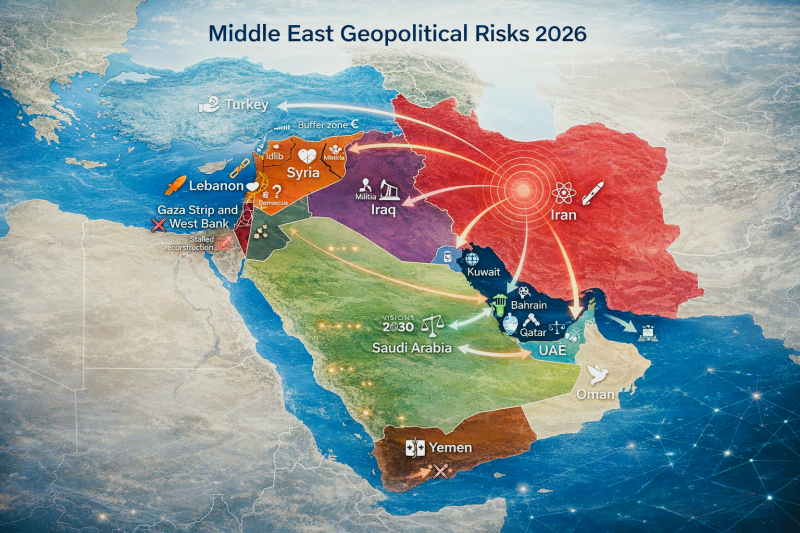
The Middle East is an important part of the global economy because the region plays a major role in energy production, international shipping, trade, tourism, aviation, and global supply chains.
When conflict disrupts transportation routes or energy supplies, the effects can spread far beyond the countries directly involved.
Businesses in the United States, Europe, Asia, and other regions can experience higher operating costs, shipping delays, changing fuel prices, supply-chain uncertainty, and shifts in consumer spending.
This article explains how the Middle East conflict can affect businesses and what companies can do to manage some of these risks.
Why Does the Middle East Matter to Global Business?
The Middle East is strategically important for international trade and energy markets.
The Strait of Hormuz, located between Iran and the Arabian Peninsula, is one of the world's most important energy shipping routes.
A disruption in this area can affect:
* Oil transportation
* Natural gas shipments
* Shipping routes
* Freight costs
* Insurance premiums
* Manufacturing
* Aviation
* Transportation
* Consumer prices
* Global supply chains
Because energy and transportation are connected to almost every industry, businesses can feel the effects even when they operate thousands of miles away.
1. Higher Energy Costs
One of the most direct effects of conflict can be increased energy-market volatility.
Businesses use energy for:
* Manufacturing
* Transportation
* Heating and cooling
* Warehousing
* Data centers
* Construction
* Agriculture
* Retail operations
When oil or gas prices increase, companies may face higher operating expenses.
For example, a delivery company may pay more for fuel, while a manufacturer may face higher transportation and production costs.
Businesses may respond by:
* Increasing prices
* Reducing expenses
* Changing suppliers
* Improving energy efficiency
* Absorbing some additional costs
The impact varies significantly by industry.
2. Higher Shipping and Freight Costs
International businesses depend on shipping companies to move raw materials and finished products.
Conflict can increase:
* Shipping rates
* Fuel surcharges
* Insurance costs
* Transit times
* Security expenses
* Inventory costs
If ships need to take longer routes to avoid an affected area, the journey can become more expensive.
This can be particularly challenging for smaller companies that have less purchasing power than large corporations.
3. Supply Chain Disruptions
Modern businesses often depend on international supply chains.
A single product may involve:
Raw materials → Manufacturer → Shipping company → Distribution center → Retailer → Customer
A disruption at any stage can affect the entire chain.
Businesses may experience:
* Delayed shipments
* Material shortages
* Higher transportation costs
* Production delays
* Inventory problems
* Longer delivery times
Companies that rely heavily on a single supplier or geographic region may face greater exposure.
4. Small Businesses Can Face Greater Pressure
Large corporations often have more resources to manage unexpected disruptions.
They may have:
* Multiple suppliers
* Larger cash reserves
* International operations
* Negotiating power
* Alternative transportation options
* Dedicated risk-management teams
Small businesses may have fewer alternatives.
This can make sudden increases in energy, shipping, insurance, or financing costs more difficult to absorb.
UNCTAD has warned that disruptions around the Strait of Hormuz can place disproportionate pressure on small and medium-sized businesses because of higher energy, freight, insurance and financing costs.
5. Inflation Can Affect Businesses and Consumers
Higher energy and transportation costs can eventually affect product prices.
For example:
Higher oil prices → Higher transportation costs → Higher business expenses → Potentially higher product prices
This can contribute to inflationary pressure.
Businesses then face a difficult decision:
* Increase prices
* Reduce margins
* Reduce costs
* Change suppliers
* Modify products
* Delay expansion
Consumers may also change their spending habits when everyday goods become more expensive.
6. Airlines and Travel Businesses Can Be Affected
Airlines are particularly sensitive to fuel prices and regional security conditions.
Conflict can result in:
* Flight cancellations
* Route changes
* Longer flight paths
* Higher fuel costs
* Lower passenger demand
* Higher insurance costs
Travel companies, hotels, restaurants, airports, and tourism businesses can also be affected when travelers change their plans.
Businesses that depend heavily on international tourism may therefore experience changes in bookings and revenue.
7. E-Commerce Businesses May Face Higher Costs
Online businesses can also feel the effects of international disruption.
An e-commerce company may depend on imported products, international suppliers, shipping companies, warehouses, and delivery networks.
Higher freight costs can increase the cost of getting products to customers.
For an online retailer, the impact may appear as:
* Higher product costs
* Higher shipping fees
* Longer delivery times
* Lower profit margins
* Inventory shortages
Businesses may respond by sourcing products from different countries or increasing inventory buffers.
8. Manufacturing Can Be Affected
Manufacturers often depend on large quantities of raw materials and components.
A disruption in international trade can make some materials more expensive or harder to obtain.
Manufacturers may therefore need to:
* Find alternative suppliers
* Increase inventory
* Change transportation routes
* Renegotiate contracts
* Adjust production schedules
Companies with diversified supply chains may have more options when one route or supplier becomes unavailable.
9. Financial Markets Can Become More Volatile
Geopolitical conflicts can affect investor expectations.
Markets may react to changes in:
* Oil prices
* Interest-rate expectations
* Inflation
* Currency values
* Corporate earnings
* Global economic growth
This can create uncertainty for businesses and investors.
Companies may become more cautious about major investments when economic conditions are unpredictable.
10. Interest Rates and Business Financing
Conflict-related energy and supply-chain shocks can contribute to inflationary pressure.
If inflation remains elevated, central banks may face difficult decisions about interest rates.
Higher borrowing costs can affect businesses that rely on:
* Business loans
* Lines of credit
* Equipment financing
* Commercial real estate loans
* Expansion financing
Small businesses with limited cash reserves may be particularly sensitive to changes in borrowing costs.
11. Insurance Costs Can Increase
Businesses operating in or near higher-risk areas may face changes in insurance availability or premiums.
Shipping companies can also face higher insurance costs when operating in areas affected by geopolitical risk.
Higher insurance costs can eventually become another operating expense for businesses.
12. Consumer Behavior Can Change
During periods of uncertainty, consumers may change how they spend money.
Some households may become more cautious and prioritize:
* Food
* Housing
* Transportation
* Healthcare
* Essential products
They may reduce spending on:
* Luxury products
* Entertainment
* Travel
* Expensive electronics
* Non-essential services
This can create different effects across industries.
13. Technology Companies Can Also Be Affected
Technology companies may appear less connected to physical supply chains, but many still depend on global manufacturing.
Hardware businesses may rely on:
* Semiconductors
* Electronics components
* Batteries
* Servers
* Data-center equipment
* International shipping
Cloud and software businesses may also face indirect effects through energy costs, infrastructure expenses, and customer spending.
14. Agriculture and Food Businesses
Energy and transportation costs can affect agriculture and food businesses.
Farmers and food producers may face higher costs for:
* Fuel
* Fertilizer
* Machinery
* Transportation
* Packaging
* Storage
Food distributors and retailers may then face higher procurement and logistics expenses.
15. What Can Businesses Do to Manage the Risk?
Businesses cannot control geopolitical events, but they can prepare for potential disruptions.
Diversify Suppliers
Avoid depending entirely on one supplier or one country when practical.
Having alternative suppliers can provide flexibility during disruptions.
Build Emergency Cash Reserves
Cash reserves can help a business manage unexpected increases in expenses.
Review Shipping Options
Businesses that import products should understand alternative shipping routes and transportation providers.
Monitor Energy Costs
Companies with significant fuel or electricity expenses can monitor energy markets and identify opportunities to improve efficiency.
Review Insurance Coverage
Businesses should regularly review their insurance coverage and understand exclusions and geographic limitations.
Maintain Appropriate Inventory
Some businesses may benefit from maintaining additional inventory for critical products or components.
However, excess inventory can also tie up cash, so businesses should balance resilience with carrying costs.
Improve Financial Planning
Businesses can create different scenarios:
Scenario 1: Normal operating conditions
Scenario 2: Moderate increase in costs
Scenario 3: Major supply-chain disruption
This can help management prepare for unexpected changes.
Which Businesses Are Most Exposed?
The impact differs by industry.
Businesses that may be more sensitive to energy and transportation disruptions include:
* Airlines
* Shipping companies
* Logistics businesses
* Manufacturers
* Importers
* Exporters
* Automotive companies
* Construction companies
* Food producers
* Retailers
* Travel businesses
Service businesses with limited physical supply chains may experience more indirect effects.
Is the Impact the Same for Every Business?
No.
The effect depends on several factors:
* Industry
* Location
* Supplier network
* Energy usage
* International exposure
* Customer base
* Cash reserves
* Financing needs
* Ability to raise prices
For example, an online consulting company may have very different exposure from an international manufacturing company.
What Should Small Business Owners Watch?
Small business owners can monitor:
Energy Prices
Higher fuel and electricity costs can affect operating expenses.
Shipping Rates
Changes in freight costs can affect imported products.
Supplier Delivery Times
Longer lead times can create inventory problems.
Customer Demand
Changes in consumer spending can affect sales.
Interest Rates
Higher borrowing costs can affect expansion and working capital.
Currency Movements
Businesses that buy or sell internationally may be affected by exchange-rate changes.
How Can Businesses Become More Resilient?
Business resilience isn't about predicting exactly what will happen.
Instead, it is about preparing for multiple possible scenarios.
A resilient business may have:
* Multiple suppliers
* Strong cash management
* Flexible logistics
* Emergency reserves
* Accurate financial forecasting
* Good customer communication
* Alternative sales channels
* Appropriate insurance
* Contingency plans
These practices can help businesses respond to many types of disruptions, not only geopolitical conflicts.
Frequently Asked Questions
How does the Middle East conflict affect businesses?
The effects can include higher energy prices, shipping costs, insurance premiums, supply-chain disruptions, financing costs, and changes in consumer demand.
Which businesses are most affected by Middle East conflict?
Energy-intensive businesses, manufacturers, shipping companies, airlines, logistics companies, importers, exporters, retailers, and travel-related businesses can be particularly sensitive to disruptions.
Does the Middle East conflict affect U.S. businesses?
Yes, U.S. businesses can be affected indirectly through global energy prices, shipping costs, supply chains, inflation, financial markets, and consumer spending.
Why does the Strait of Hormuz matter to businesses?
The Strait is a major global energy shipping route. Disruptions can affect oil and gas markets and therefore influence transportation, manufacturing, logistics, and other business costs.
Can small businesses prepare for geopolitical risk?
Yes. Businesses can diversify suppliers, maintain cash reserves, review insurance, monitor costs, develop contingency plans, and identify alternative logistics options.
Does conflict always cause higher oil prices?
Not necessarily. Oil prices can move in either direction depending on supply, demand, production, inventories, diplomatic developments, and market expectations.
Can geopolitical conflict affect inflation?
Yes. If conflict causes sustained increases in energy, transportation, or other input costs, it can contribute to inflationary pressure.
Final Takeaway
The economic effects of Middle East conflict can extend well beyond the region itself.
Businesses may experience changes in energy costs, shipping rates, insurance, supply chains, financing conditions, and consumer demand.
The impact is not uniform. Companies with significant international exposure or energy and transportation costs may face different challenges from businesses that operate mainly through local services.
For small businesses, preparation can be particularly important. Diversifying suppliers, managing cash carefully, monitoring operating costs, and creating contingency plans can help companies respond to unexpected changes.
Because geopolitical and economic conditions can change quickly, businesses should rely on current market information when making major financial or operational decisions.